Using Your Color Palette and Color Type in Your Wardrobe: Making Your Results Work for Everyday Life
Your color palette should make decisions easier, not impose new rules. Here’s how to truly use your color type result when getting dressed, shopping, and decluttering.
01
Your result is a filter, not a strict set of rules
Using your color palette and color type in your wardrobe works when you treat it as a decision-making tool rather than a list of restrictions. Your best colors make your complexion look clearer, your eyes more awake, and your overall appearance more balanced—but they do not need to determine every single pair of socks. Start with the pieces you wear close to your face: tops, blouses, scarves, coats, glasses, and lipstick. That is where the difference is most visible. You can choose trousers, shoes, or bags much more freely because they barely affect your complexion. This way, your color type result becomes a practical shortcut in the morning rather than a complicated project.
02
Using your color palette and color type in your wardrobe: three color roles
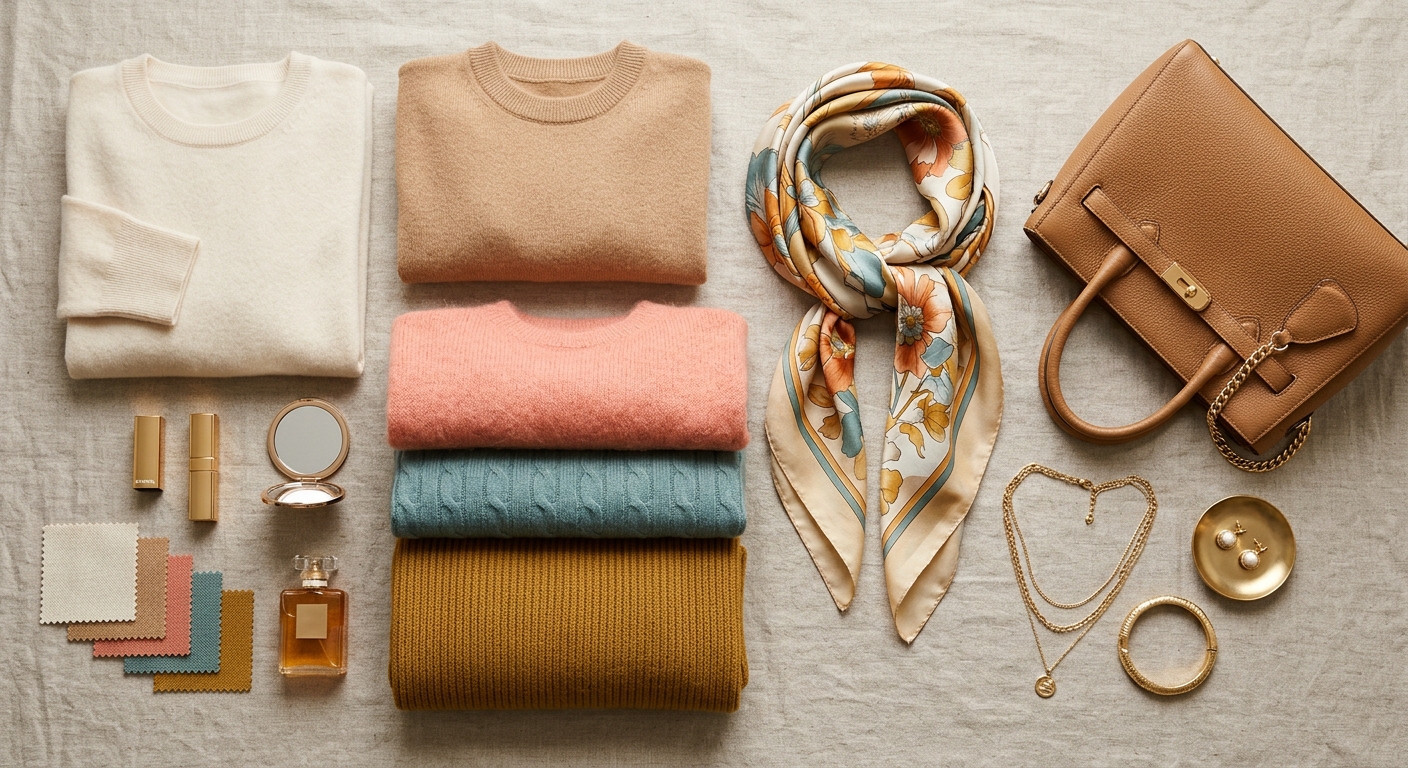
To make your palette wearable, divide it into three roles: base colors, favorite colors, and accent colors. Base colors make up the largest part of your wardrobe, such as a suitable navy, taupe, brown, gray, or cream. Favorite colors are the shades that make you feel vibrant and completely at ease; they are especially useful for tops and dresses. Use accent colors deliberately in scarves, bags, shoes, or jewelry. This structure prevents your closet from looking like a paint box and makes styling easier. If you are unsure, you can use specific outfit ideas from the Style Guide for Women to translate your colors into everyday looks.
«Do not test a color on your forearm—hold the garment directly underneath your makeup-free face instead.»
— Mira Mirror Magazine
03
When shopping, the fabric by your face is what matters
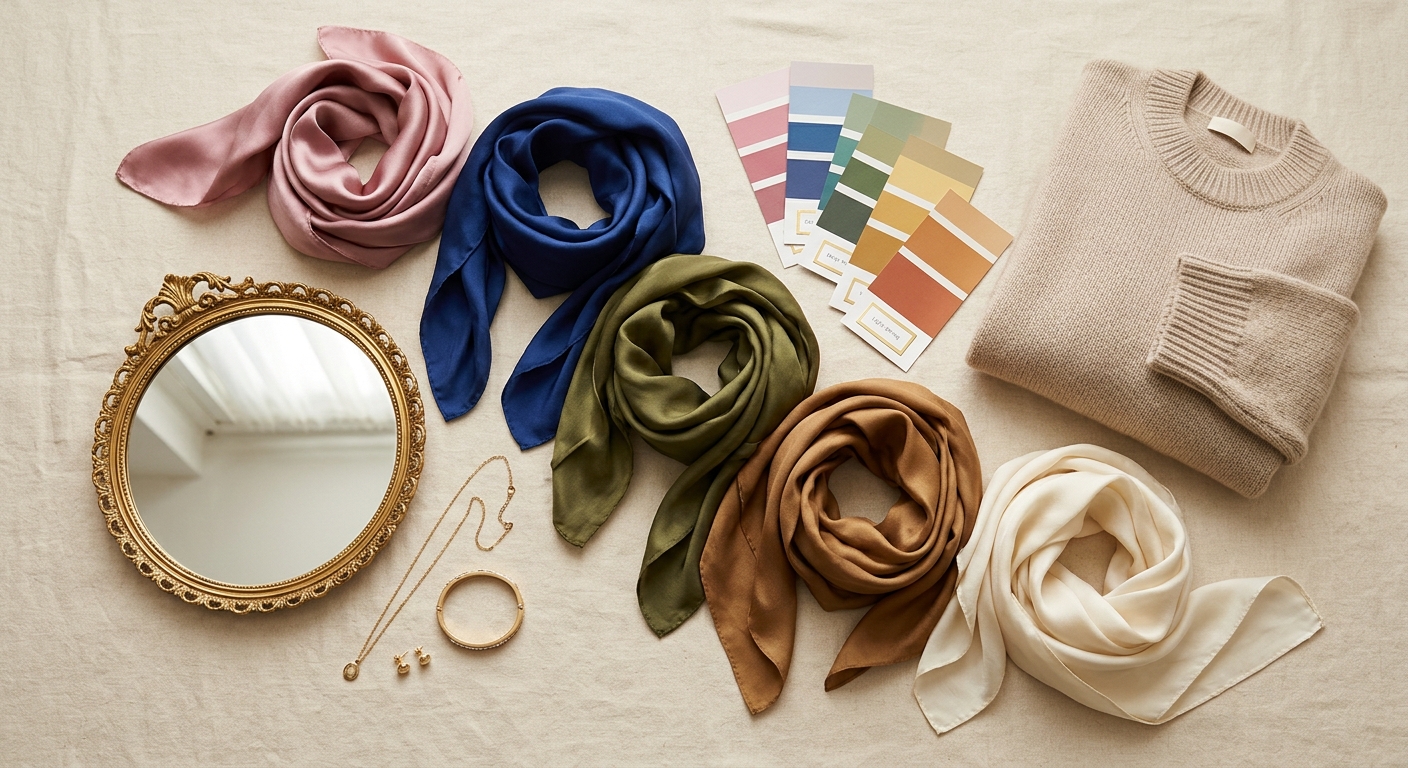
Do not test a color on your forearm—hold the garment directly underneath your makeup-free face instead. Your arm often has a different undertone, may be more tanned, or may be less sensitive to contrast than your face. A harmonious color makes redness and shadows in the skin visually recede; an unsuitable one usually emphasizes them, even before you assess the cut. Take those ten seconds, especially with jackets, knitwear, blouses, and dresses. In difficult lighting, photograph two options side by side and compare them later. Most importantly, do not buy something just because a trendy color is hanging everywhere right now. If it does not flatter you, it will most likely remain a rarely worn compromise piece.
04
You do not need to get rid of favorite pieces in the wrong colors straight away
A piece in a less-than-ideal color is not a styling mistake, and certainly not a reason for radical decluttering. Simply move it away from your face: wear the sweater, for example, with a scarf, shirt collar, or necklace in a suitable shade. With dresses, a blazer or cardigan from your palette can soften the contrast. Lipstick, blush, and jewelry can also help in a targeted way: cooler undertones often suit silver, white gold, and rosy makeup shades better, while warmer types often look great in gold, bronze, and peachy tones. What matters is not perfection, but the overall effect. If you love wearing an item and it does not make you look washed out, it can stay.
05
Organize your closet by how well pieces combine, not by category
When tidying up, do not start by putting away everything outside your palette. Instead, gather the pieces that work together color-wise and build small outfit groups from them. Ideally, a suitable top should work with at least two bottoms and one jacket. This lets you immediately see which colors are truly missing from your everyday wardrobe and which ones you already own twice. This clarity is especially worthwhile for basics: one good dark neutral, one light neutral, and two or three top colors often go further than ten random individual pieces. If you want to structure your wardrobe for the long term, Mira Plus offers additional support for a well-organized closet.
06
Mira Color Type Analysis & Digital Wardrobe: keep your palette with you when making decisions
The real challenge begins after the analysis: your result needs to show up where you make decisions—in front of the mirror, while shopping, and when putting looks together. That is exactly why Mira combines color type analysis with a digital wardrobe. Your personal palette appears in the Mira app alongside every outfit check and your wardrobe, so it does not end up as a forgotten PDF. You can check colors against outfits, organize your pieces by palette, and recognize more quickly whether an item suits you before buying it. The app is available for free in the App Store and on Google Play, supporting you with an AI outfit check, color type analysis, and a digital wardrobe.
Frequently asked questions
Ready for your mirror moment?
Discover MiraRelated articles
Now in the stores
Get Mira on your phone.
The Mira app is now free on the Apple App Store and Google Play – in 5 languages. Download it and start with your first honest style analysis.