Colour Analysis: What Colour Type Am I? The Honest Way to Find Your Colours
A good colour analysis doesn’t tell you what you’re allowed to wear, but which colours make your face look calm, clear and vibrant. Here’s how to find your colour type without guesswork or putting yourself into a rigid box.
01
Colour Analysis: What Colour Type Am I?
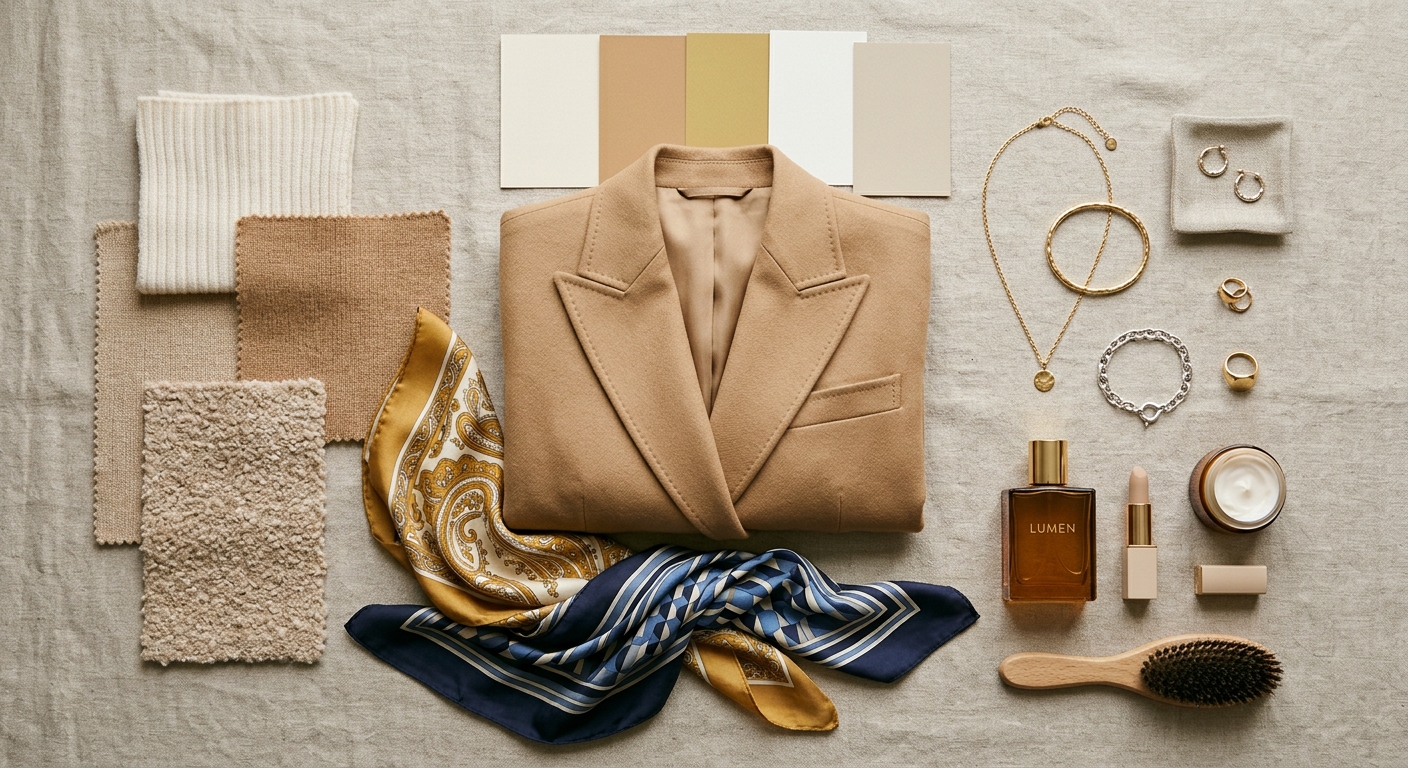
Colour analysis: what colour type am I? A colour analysis doesn’t categorise you according to your fashion taste—it shows which colour temperatures and contrasts make your face look fresh and clear. You can find your colour type by looking at your undertone, natural lightness and the contrast between your skin, hair and eyes together. This is far more helpful than asking whether one particular favourite colour suits you. A palette should make decisions about lipstick, blazers and colours worn close to your face easier. It doesn’t replace your taste or your style. If you see yourself in two types, that isn’t a mistake: many features sit on a spectrum and need a realistic perspective rather than a rigid category.
02
What a Colour Analysis Really Measures
At its core, a colour analysis looks at three things: your skin’s undertone, your natural contrast, and the effect of your hair and eyes. Undertone isn’t the same as light or dark: skin can be light yet warm, or dark yet cool. Warm usually means a golden-peachy impression, while cool tends to look rosier, bluish or neutrally clear. Contrast is about how strongly your natural features stand out from one another. Dark hair with light skin has more contrast than medium-brown hair with medium skin. Eye and hair colour offer clues, but they never decide things on their own. That’s why the blanket rule that blue eyes automatically mean you’re a Summer type is simply too superficial.
«Unsuitable colours don’t make you any less beautiful—but they can compete with your natural colouring.»
— Mira Mirror Magazine
03
Why the Wrong Colours Can Make You Look Tired
Unsuitable colours don’t make you any less beautiful—but they can compete with your natural colouring. A very cool, stark white can make shadows under the eyes more noticeable if you have a warm undertone. Conversely, a yellowish beige can make a cool complexion look washed out. This is especially visible with tops, scarves, jewellery and lip colours because they sit directly next to your face. The nuance matters: red isn’t automatically warm, and blue isn’t automatically cool. A muted petrol blue, clear cobalt blue or warm rust red tell completely different stories. Our women’s style guide also shows you how to turn your insights into wearable combinations.
04
The Window Self-Check: Great for Initial Clues
For an honest self-check, you need daylight by a window, a makeup-free face, and several fabrics or tops in different shades. Hold a cream and a pure white cloth, silver and gold jewellery, plus a cool pink and a warm coral next to your face one after the other. Don’t just notice what you like; look at whether your skin, eye area and lips seem calmer or more unsettled. If you’re unsure, photograph the comparison in the same light. The catch: phone cameras, tanned skin, dyed hair and your own preferences can quickly distort your view. The self-check is a useful starting point, but not a final verdict.
05
Professional Draping, AI or a Mirror: Which Approach Suits You?
With professional draping, coloured fabrics are systematically compared against your makeup-free face. It’s the most thorough approach, especially if you often waver between warm and cool or want to rebuild your wardrobe with intention. However, it takes time, costs money and depends on careful advice. The self-check is free and immediate, but it requires practice. An AI photo analysis sits in between: it delivers a quick, structured initial assessment, but shouldn’t be treated as infallible truth in difficult lighting. My clear view: use the method that gets you taking action. A helpful palette that you use in everyday life is more valuable than a perfect label sitting in a drawer.
06
Check Your Colour Palette with the Mira Colour Type Analysis
If you want quick, honest guidance, start with Mira’s free colour test: it gives you an initial assessment in two minutes. Then the Mira app analyses your colour type and suitable palette using a photo. This lets you not only understand colour ideas, but also check them specifically while shopping or standing in front of your wardrobe. The app is free in the App Store and on Google Play; the AI outfit check also supports you with daily combinations. See the result as a tool, not a restriction: even a Winter type can wear warm camel if the cut, material and distance from the face work. A good colour palette creates freedom because it makes your decisions easier.
Frequently asked questions
Ready for your mirror moment?
Discover MiraRelated articles
Now in the stores
Get Mira on your phone.
The Mira app is now free on the Apple App Store and Google Play – in 5 languages. Download it and start with your first honest style analysis.